
What 10+ years as a dog trainer have taught me about dog training series
When I was twenty-three years old, my mentor had a friend who was hiring for her doggy daycare. I didn’t hesitate to apply, but I’ll be honest: I’d never even heard of a doggy daycare before. The idea alone intrigued me.
When I sat down with Michelle, the owner, she asked if I’d ever worked in a doggy daycare before.
I laughed, “I didn’t even know these existed.”
A smile crept across her face as she said something that shifted my mindset.
“The best thing you can do to become a good dog trainer is to watch.”
“Watch?” I asked.
“Yes,” she said. “Watch. Doggy daycare is the best place to learn about dog behaviour because you can observe dogs all day long. If you pay attention, you’ll learn to anticipate their next move, understand them, and teach them.”
At the time, I didn’t realize how powerful her advice was.
Learning to Watch: Understanding dog training through observation
So that’s what I did.
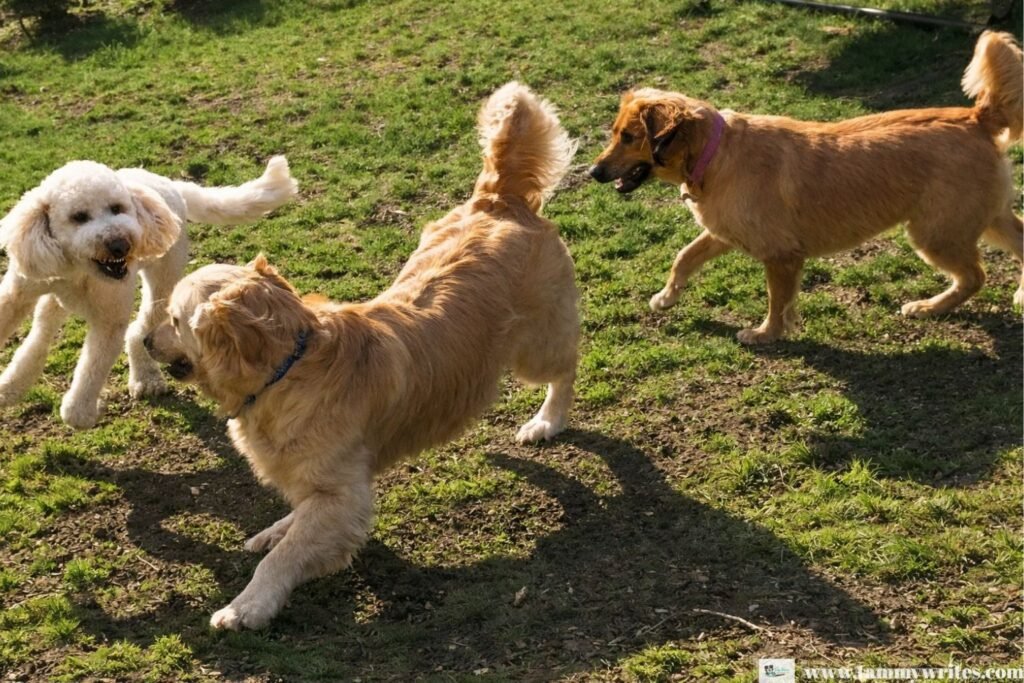
Watched dogs play together in large groups. Which dogs naturally gravitated toward one another, and which dogs preferred space. How tension built, how it resolved, and how often it never turned into a problem because someone noticed early enough.
I watched how owners interacted with their dogs during drop-off and pick-up. How nervous energy transferred down the leash. The way excitement escalated into chaos when no one meant for it to happen.
During group classes, I watched dogs struggle—not because they were stubborn or “bad,” but because they were confused.
Thanks to Michelle’s advice, I learned how to spot one of the biggest mistakes people make in dog training.
It’s subtle. It’s unintentional. And almost everyone does it at some point.
Mixed signals in dog training.
What are mixed signals in dog training?
Mixed signals happen when our words and actions don’t match.
The tricky part? Most people don’t even realize they’re doing it.
This isn’t a blame thing. Mixed signals aren’t a sign that someone doesn’t care or isn’t trying hard enough. They come from good intentions—protection, love, concern, or urgency.
However, dogs don’t interpret the world the way we do — they rely far more on body language and physical cues.
Why mixed signals happen in dog training
Humans tend to humanize animals.
We do this instinctively. It’s how we connect, how we bond, and how we make sense of beings who don’t speak our language.
And honestly? That’s not a bad thing.
I talk to my dogs constantly, explain my day, apologize when I bump into them, and tell them my secrets. Do they talk back? No. But do I feel like they would if they could? Absolutely. (And if they did, I’m not sure I’d be ready for what they’d say.)
Humanizing animals isn’t the problem.
Humanizing during training is where things can go sideways.
When humanizing hurts more than it helps in dog training
One of the most common examples I see is a dog who won’t come when called.
If you’ve ever experienced this, you know how frustrating it can feel.
Your first instinct is to follow your dog. You want to keep them in sight, protect them, catch them before something goes wrong.
The instinct makes sense.
But here’s the issue.
When you step toward your dog, what do they usually do?
They move farther away.
This is where mixed signals happen.
You’re calling your dog to you, but you’re walking toward them. To a dog, that’s contradictory information.
Dogs don’t rely on verbal language first. Their primary language is body language—movement, posture, direction, energy.
Your dog hears you saying “come,” your body is saying “go that way.”
And dogs will almost always follow the physical cue.
What to do instead: clear communication through body language
Instead of moving toward your dog, do the opposite.
Here are a few options:
-Call your dog and walk away.
-Call your dog and lie down.
-Call your dog and investigate something interesting on the ground.
These actions create curiosity and break the pattern. They give your dog a reason to re-engage with you.
Not every option works for every dog—and that’s okay.
Experiment. Observe. Adjust.
Why these approaches work for confused dogs
Motivation drives behaviour — and understanding their motivation is a huge part of clear dog training communication.
Your dog is choosing between options:
-Play
-Explore
-Engage with you
When recall fails, it’s rarely because your dog “doesn’t know better.” It’s because they’re torn between motivations—or confused about what you’re asking.
Clear body language reduces confusion.
Real-life dog training lessons from real dogs
I once walked a young Bernese Mountain Dog for a client. She slipped off her leash and a game of chase started.
She was fast, playful, and thrilled I was reacting.
So I laid down on the ground.
She froze.
Did she run over and jump on me? Yes. Did I end up with an 80-lb dog landing on my chest? Absolutely!
But it worked.
We played for a moment; I grabbed her collar and clipped the leash back on. She wasn’t upset—she was delighted. She got what she wanted: connection and play.
Her brother, a young Golden Retriever, needed a different approach.
The only way to catch him was to find a very interesting patch of grass. He’d wander over, shove his cold black nose between my face and the ground, and stare at me like, “Whatcha got there?”
My Border Collie, Rosie, followed me if I walked away.
That trick also worked with my husky cross, my Rottweiler cross, countless foster dogs (there were a lot), and my current dogs too.
Different personalities. Same principle. Clear communication through body language.
Why mixed signals matter more than you think in dog training
From my experience, mixed signals are the top mistake most people make in dog training.
And it doesn’t stop with recall.
Mixed signals in dog training show up in:
-Excessive barking out the window
-Reactivity toward dogs, people, or objects
-Leash pulling
-Dog sports
-Everyday communication
There are countless small ways our bodies contradict our words—leaning forward, tightening the leash, holding our breath, freezing in place.
Dogs notice all of it.
That’s why training can feel stalled even when you’re “doing everything right.”
A mindset shift in dog training, not a quick fix
Learning to reduce mixed signals in dog training isn’t about perfection.
It’s about awareness.
It’s about slowing down, watching your dog, and asking yourself:
What am I communicating right now—without realizing it?
This mindset shift takes time. Even seasoned trainers still catch themselves doing it.
I certainly do.
You’re not alone: learning clear dog training communication
If this sounds familiar, you’re not failing your dog.
You’re learning a second language—and it’s one that’s spoken through movement, timing and body language.
If you found this post helpful, I’ll be sharing more lessons I’ve learned over the last decade as a dog trainer. Part two is about motivation in dog training.
I hope these stories help you spot the connections you might be missing—so you can train with more clarity, less frustration, and a deeper understanding of your dog.