
What 10+ years as a dog trainer have taught me about dog training series
Does it feel like your dog isn’t willing to learn at all? Gets distracted by every leaf, blade of grass, flake of snow. Does your dog work for you in some situations, but not in others? Are you struggling to find the right motivation to use with your dog in highly distracting places?
The best motivation for your dog gives them the biggest dopamine hit in the situation. I’ve worked with dogs who did well in the house when it’s quiet, amazing in the yard, but once we ventured out, it was like he forgot everything we just learned.
I promise it’s not you!
You’re doing everything right. Taking the time to teach the foundation behaviours is key to success.
So why does it feel like it’s all a waste of time once we get out in public!
The answer here is dopamine hits — and you can use them to overcome any training obstacle if you know how to use them correctly.
How can trainers apply dopamine hits as motivation in dog training?
Dopamine hits give your dog pleasure. Makes them feel good for doing the thing that you want them to do, so they do the behaviour willingly. Therefore, my method of training can start as early as four-weeks-old.
With clicker training, every morsel of food gives your dog a dopamine hit. You can increase or decrease the rate of reinforcement, which will increase or decrease the rate of dopamine hits.
For example, when I work with a dog who is struggling and suddenly a light bulb goes on for him, I will give him what is called a jackpot. A jackpot is when you give multiple treats, but one at a time.
Why do we do this?
This increases the dopamine hit experience for your dog. Provides pleasure and really reinforces the behaviour. He’s going to go back to that behaviour more often now because of the rate of dopamine hits he received.
What if food doesn’t motivate my dog?
You can deliver dopamine hits in multiple ways. Not all dogs are motivated for food. As much as you can increase the quality of food used (steak, anyone?), some dogs can’t be motivated that way.
Motivation can include playtime and the use of toys. Dogs love spending time with us. Bonding with us over a tug toy, a ball, or a game.
When your dog does something right, offer a tug toy or a ball and play for a minute or two. This makes your dog happy and feel good. So when you end play and get back to training, they know what to do in order to get play started again. This takes repetition, but eventually your dog will learn that they can control how often the tug toy comes out by how often they do the correct behaviour.
This worked really well with my Border Collie, Rosie. She was a ball nut. One day I was really mean and put a dozen tennis balls on the floor all around her. I told her to leave it as I slowly put them all down. She was chomping at the bit to get one, but she stayed in her spot.
Every so often I’d see her twitch as she stopped herself from jumping up to go after one of the many balls around her. This took extreme willpower and a lot of mental stimulation for her NOT to move.
What motivated her to stay in place?
I kept one ball in my hand. That ball was the one that would be thrown for her once she was released. She watched that particular ball like a hawk.
When I gave her the release cue, I’d throw the ball, and she’d get her reward. Fetch. She occasionally got distracted by the dozen balls on the floor, but mostly she went after the ball that was thrown.
What if food or toys don’t motivate my dog?
If your dog isn’t motivated by food or toys, then you can use praise and or the environment. Both options are great.
Some dogs would rather sniff a tree or explore a bush than get food or play. There’s nothing wrong with that. I’ve seen this more in older dogs, but some young dogs with old souls can be like this too. They’re not driven by their stomach or by play anymore, but dogs will always love to explore.
Therefore, “you can’t teach old dogs new tricks” became a common saying. You can if you use the right motivation, but most of the time praise and environment get overlooked as rewards. So when these older dogs, or dogs with old souls, aren’t interested in food or games, training comes to a halt. This is also true for dogs who are really distracted in some situations.
This doesn’t have to be the case.
Many times I did private classes with distractible dogs like Golden Retrievers and Labs. When I work with a dog that can’t focus in a session, I’ll use whatever is distracting the dog as the motivation.
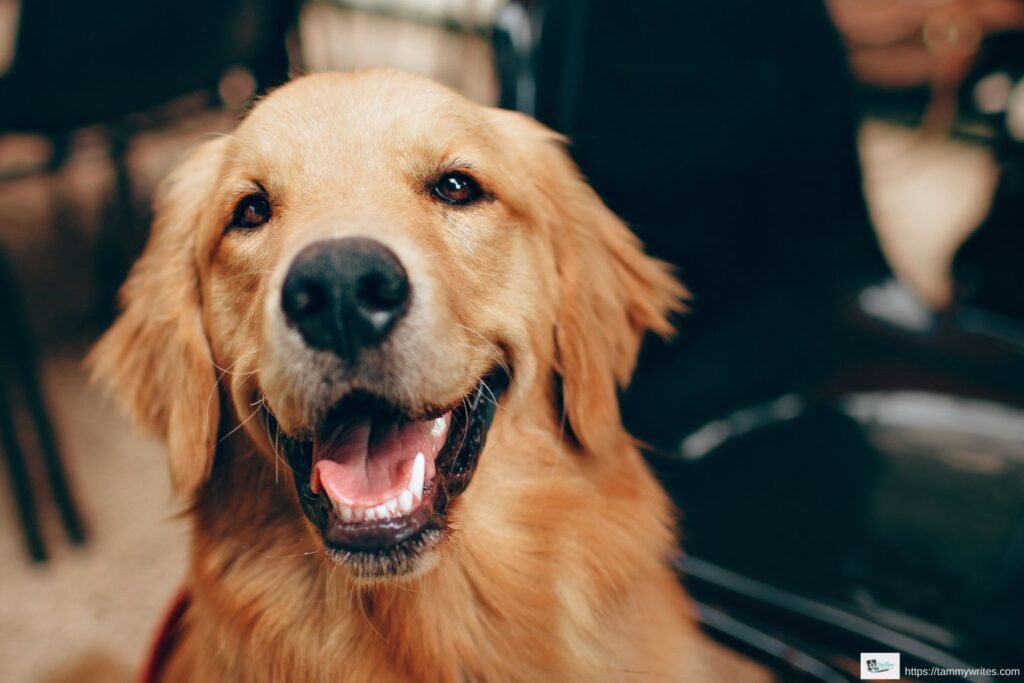
For example, one day I was working with a client on loose-leash walking his young Golden Retriever. He’d done the foundation work in his house and backyard, but every time he tried to work in the driveway, his dog would get distracted. So distracted he stopped caring about food and praise.
This is when I introduced the use of the environment. I noticed he’d pull toward a tall, white birch on the boulevard. Obviously something there caught his attention, and he needed to investigate this very interesting tree. Every time he’d cause the leash to tighten, he’d lose access to this very interesting tree.
How’d we do this?
When we took a step toward the tree that he wanted to investigate, and the leash went tight, we’d go back to the start. If the leash stayed slack, we’d move toward the tree. This became a game that motivated him to keep the leash slack. Anytime the leash got tight, we’d move back to the start.
This took patience. Lots and lots of patience. In the beginning, we ended up at the start after one or two steps. After several minutes of playing this game, we could get to six steps before we had to go back. This can take a while, but patience and repetition are key here. It took him almost the entire hour to get to the tree.
How is this progress?
The second time we played, it took him half the time. He’d learned through repetition that as long as the leash stayed loose he’d get to go to the very interesting tree.
Third time we got to the tree within a few minutes.
Why’d this work so well for him?
His desire to explore that tree motivated him. It didn’t matter that he explored that tree many times before; something about that tree interested him over and over.
This is how you can effectively use motivation in dog training
It doesn’t matter what your dog finds motivating. Once you find the thing that your dog desires most, you can use it to teach your dog new things. The right motivation can speed up dog training, decrease distractibility, and build a better understanding between you and your dog.
If you enjoyed this post about motivation, check out my first post about mixed signals in dog training. My next article in this series will be about advancing dog training too quickly.
If you’d like to be notified when we post a new article, subscribe to our newsletter. We don’t send spam. We only send you articles that help you on your journey as a dog owner.