
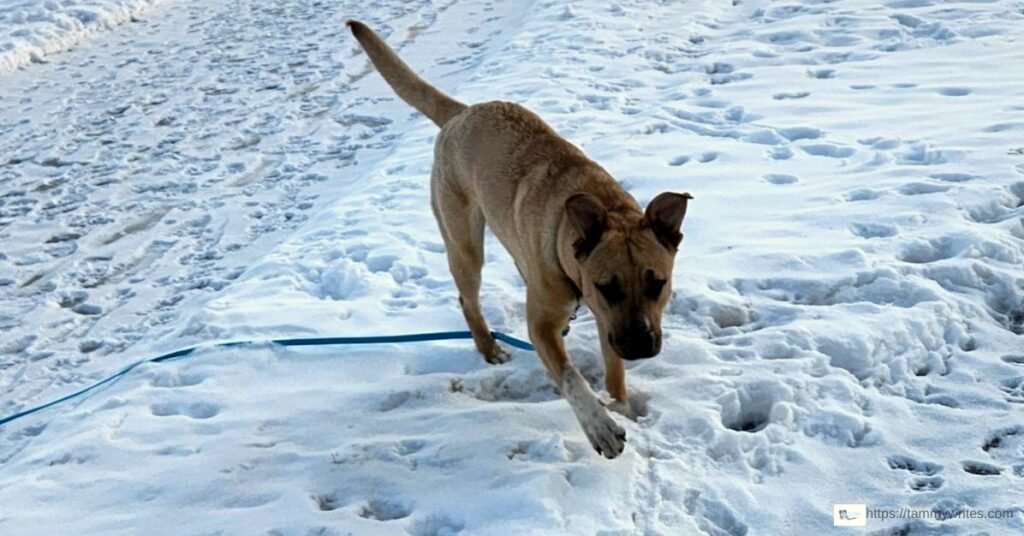
My dog acts so weird in the spring.
Normally he walks pretty well on a leash. He doesn’t listen all the time, but I like to think he listens about eighty per cent of the time.
Then the snow melts and the days get longer as the world slowly wakes up.
Animals crawl out of their dens after hibernation and begin searching for their first meals in months. Birds return from down south, and suddenly the trees are full of chirping again.
And the family dog?
He’s happily dragging us through mud puddles and melting snow to get to the next amazing smell. By the end of the walk, we are both covered in mud, burrs, and whatever else he rolled in. I am exhausted, and he is just getting started.
Where is my well-trained best friend from last month? He walked so nicely.
Who is this dog?
Can I get a refund?
If this sounds familiar, you are not alone. Many dog owners notice their dogs behave differently once spring arrives.
This sudden change is often called spring fever in dogs, and it can catch even experienced dog owners off guard.
The good news is that this behaviour is completely normal.
Why Do Dogs Act Different in the Spring?
Spring is a time of massive environmental change.
During winter, the world is quiet and predictable. Cold weather keeps many animals hidden, and most plants are dormant. Your dog experiences fewer smells, fewer animals, and fewer changes in the environment.
Then spring arrives, and everything shifts at once.
The snow melts, and the soil thaws. Months of trapped scents suddenly released into the air. Plants grow again, and animals become more active.
For dogs, this is like someone turning the volume up on the world.
Their sense of smell is incredibly powerful. Dogs have around 300 million scent receptors in their noses, compared to roughly six million in humans. What smells like damp soil or fresh grass to us contains layers of information to a dog.
Every smell tells a story.
Your dog can smell which animals passed through an area, how recently they were there, and sometimes even their emotional state. When spring arrives, the number of scents in the environment increases dramatically.
The result is a dog whose brain is flooded with new information.
That is why many dogs seem distracted, excited, or completely uninterested in listening to their owners during spring walks.
Your dog is not suddenly badly trained. They are simply trying to process a much more stimulating environment.
What Is Spring Fever in Dogs?
Spring fever in dogs refers to the burst of energy and excitement many dogs experience when the seasons change.
Longer daylight hours can increase energy levels for both humans and animals. Warmer temperatures encourage more outdoor activities. Wildlife becomes active again, which adds even more interesting sights and smells for dogs.
These changes combine to create a very stimulating environment.
Dogs who were calm and focused during the winter may suddenly seem hyper, distracted, or impulsive once spring arrives.
You might notice behaviours such as:
-pulling harder on the leash
-ignoring cues they normally follow
-sniffing everything in sight
-chasing birds or squirrels
-barking more at movement
-becoming overly excited during walks
For many dogs, this behaviour is temporary while they adjust to the seasonal change.
Can Spring Make Dogs Reactive?
Yes, spring can absolutely increase reactive behaviour in some dogs.
When dogs experience sensory overload, they often respond in one of two ways.
Some dogs become extremely excited. These are the dogs that want to greet everything they see. Other dogs, people, wildlife, blowing leaves, and even moving shadows can trigger excitement.
Other dogs respond to the overwhelming environment with caution or fear. These dogs may bark, lunge, or react defensively because the sudden changes feel unpredictable.
Both reactions come from the same place. The dog is trying to process a huge amount of stimulation.
This is why some dogs appear more reactive during the spring months even if they were calm during winter.
Why Dogs Pull More on Walks in Spring
Many owners notice that their dogs suddenly pull harder on the leash once spring arrives.
This usually happens because the dog is trying to reach interesting smells as quickly as possible.
Dogs explore the world through scent. When the environment is full of exciting smells, your dog naturally wants to investigate them all.
Imagine walking through a bookstore filled with your favourite topics while someone keeps pulling you past every shelf. That is what a spring walk can feel like for your dog.
Pulling is not stubborn behaviour. It is usually a sign that your dog is highly motivated by the environment.
Helping your dog access those smells in a structured way can actually improve leash behaviour over time.
How to Help Your Dog Adjust to Spring
One of the simplest ways to help your dog during this seasonal shift is to change your mindset about walks.
Instead of going for a walk with the goal of covering distance, try thinking of it as an exploration walk.
Your dog’s brain is craving information. Giving them time to sniff and explore can help release some of that excitement.
Exploration walks also provide excellent mental stimulation, which can be just as tiring for dogs as physical exercise.
Try Using a Long Line
A long training line can be a great tool during spring walks. Here’s a link to the one I’ve been using, but you can use whatever you’d like.
Instead of keeping your dog on a short leash the entire time, attach a long line that allows them more freedom to explore safely. Many people use lines that are 10 feet, 15 feet, or even 30 feet long.
This extra space allows your dog to investigate smells while still keeping them under control.
Bring high value treats with you and practice recalls during these exploration walks.
Call your dog back to you occasionally. When they return, reward them generously and then release them back to exploring.
If they do not come right away, gently reel them in using the long line. Ask for a sit, reward them, and then let them return to sniffing.
After several repetitions many dogs begin responding to recalls again even with all the spring distractions.
Teach Leash Awareness
Another helpful exercise is teaching your dog to be aware of leash pressure.
Whenever the leash becomes tight, call your dog back toward you.
This teaches them that pulling on the leash ends their freedom, while staying within the loose range of the leash allows them to keep exploring.
Over time most dogs learn to keep the leash slack so they can continue investigating their environment.
This often results in calmer walks where your dog is sniffing happily beside you instead of dragging you down the path.
Add Simple Training Into Your Walks
Spring walks can also be a great opportunity to practice short training exercises.
They do not need to be complicated.
You can practice cues such as:
-recall
-sit
-look at me
-short moments of loose leash walking
These small training moments help your dog stay connected with you even while exploring.
They also provide additional mental stimulation, which can help reduce excess energy.
A dog who gets to sniff, explore, and think during a walk is often much more satisfied than a dog who simply marches around the block.
What If You Have to Walk on a Short Leash?
Sometimes exploration walks are not possible. Busy streets, sidewalks, or crowded areas may require your dog to stay close.
In those situations it helps to adjust your expectations.
Instead of walking steadily from one destination to another, allow your dog time to stop and investigate interesting areas.
Stopping for a minute or two to sniff a patch of grass or a tree can help satisfy your dog’s curiosity.
These sniffing breaks can actually make the rest of the walk calmer and more enjoyable.
Approaching walks with an exploration mindset makes these pauses feel less frustrating for both you and your dog.
Be Patient With Seasonal Changes
Spring is one of the most stimulating times of the year for dogs.
The world suddenly fills with smells, sounds, movement, and activity. For many dogs it feels like stepping into an entirely new environment.
This adjustment period can make even well trained dogs seem distracted or overly excited.
Your dog has not forgotten their training.
They are simply responding to a much more interesting world.
With patience, practice, and a little extra exploration time, most dogs settle back into their normal routines.
You will eventually get your well behaved walking partner back.
They might still be covered in mud, though.
And if you live somewhere with spring thaw like we do, there is a good chance you will be too.
If you enjoyed this article, check out the other ones we have on our blog. You might find them just as helpful, and hopefully entertaining, as this one. As part of a series there’s:
Part 1: Mixed Signals In Dog Training.
Part 2: Motivation in Dog Training.
Part 3: My Dog Doesn’t Listen Outside and It’s Frustrating!
Get notified every time I upload a new blog post. I post twice a month on all topics related to pets.